E

Education

Assignment Weight Benchmark Calculator

Make the direction and size of a score gap explicit before deciding whether to review, maintain, or escalate support.

ASSIGNMENT WEIGHT BENCHMARK

Compare a score with a benchmark without losing the gap direction

The calculator reports signed distance, absolute distance, and a review-band state. It does not invent a benchmark or call it a universal standard.

Signed gap
Absolute gap
Score
Benchmark
Review band
Decision state

LIVE BENCHMARK MAP

Direction, distance, and review zone are separate

The live bars display the score and benchmark; the table retains the exact gap.
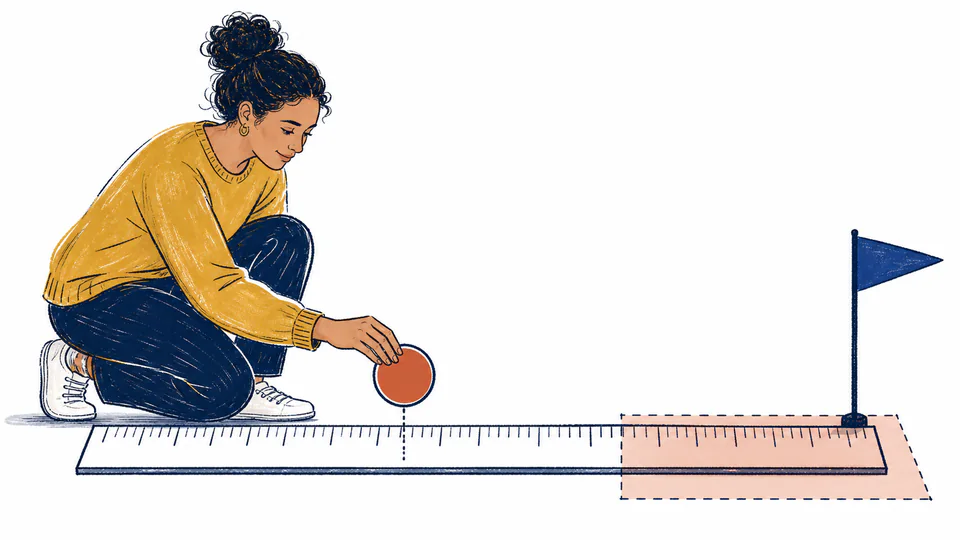
A student places a score token on a ruler beside a benchmark flag and a shaded review zone.
The ruler is a conceptual comparison, not a normative scale.
Benchmark comparison ledgerThresholds are evaluated before rounding.
ItemFormula pathCurrent valueDecision use

HOW TO USE

Document the comparison

  1. Confirm the score and benchmark share the same grading basis.
  2. Enter the source benchmark and record its owner and date.
  3. Choose a review band that belongs to the local decision rule.
  4. Read signed gap before absolute gap.
  5. Use the state to decide whether evidence review is warranted.

SUBJECT FUNDAMENTALS

Benchmark concepts

Benchmark
Declared comparison value.
Signed gap
Score minus benchmark.
Absolute gap
Distance without direction.
Review band
Local distance within which review is triggered.
Near state
Absolute gap within the band.
Basis
Population, period, and scoring definition.

CALCULATION METHOD

Subtract first, classify second

G = S − BA = |G|Near when A ≤ band

Defaults: G=84−80=4 points; A=4; with a 3-point band the state is above benchmark, outside band.

DEEPER ANALYSIS

Interpretation boundaries

Basis matching

A benchmark from another period or population may not be comparable.

Band ownership

The band is a local policy parameter, not a universal statistical interval.

Rounding risk

Classify on unrounded values so a display tie does not change the state.

DETAILED CALCULATION PROCESS

Ten auditable steps

  1. Formula G=S−B.
  2. Signed subtraction preserves direction.
  3. S,B are percentages; G,A,band are points.
  4. Defaults are 84,80,3.
  5. No unit conversion is needed.
  6. G=84−80=4.
  7. A=|4|=4.
  8. 4 is greater than the 3-point band.
  9. Status is above benchmark.
  10. Reverse check: 80+4=84.

RESULT INTERPRETATION

State what the gap can and cannot say

Above or below is descriptive. It does not establish why the gap exists or whether the benchmark is fair.

WORKED DECISION CASES

Two review choices

Small gap, inside band

Review the evidence and measurement noise before changing a study plan.

Large negative gap

Check category weights, denominator, and support needs before interpreting the score as ability.

EVIDENCE AND DATA LINEAGE

Record the comparator

Retain benchmark source, period, population, score basis, band owner, and calculation date.

LIMITS AND EXCLUSIONS

No causal diagnosis

  • No claim of rank, ability, fairness, or cause.
  • No automatic confidence interval or sample-size adjustment.
  • No replacement for official policy.
  • No hidden conversion between grading bases.

TECHNICAL GLOSSARY

Benchmark terms

Comparator
Value used as the reference.
Signed difference
Difference retaining direction.
Absolute difference
Magnitude without direction.
Review band
Declared action zone.
Basis
Definition behind the values.
Boundary
Threshold where classification changes.

RELIABLE SOURCES

Assessment context

IMPORTANT NOTE

Validate the comparator

A precise gap to an unsuitable benchmark is still an unsuitable decision.

FREQUENTLY ASKED QUESTIONS

Benchmark questions

What does near benchmark mean?

The absolute gap is within the entered review band.

Can the benchmark be zero?

Yes, although the decision still depends on the declared meaning of zero.

Why show signed and absolute gaps?

Signed gap shows direction; absolute gap shows distance.

Is the benchmark an official standard?

Only if the source owner says so; otherwise it is a planning reference.

RELATED CALCULATORS

Next review

Use weighted-score and progress analysis to explain how the gap was formed.