Method boundary
Converts the target percent into a whole correct-item count and subtracts current correct items
Education
Find the number of additional correct answers required for a raw target Use this for raw practice planning only; official scaled targets require the test program conversion process.
RAW TARGET ITEM COUNT
Convert an entered raw-accuracy target into a whole correct-item count over the scored denominator.
STANDARDIZED TEST TARGET SCORE DECISION MAP
This page separates the source record, the arithmetic threshold, and the policy follow-up for Standardized Test Target Score Calculator. The reconciliation table below is the auditable calculation record.
| Target step | Item count | Denominator | Percentage | Whole-item result | Meaning |
|---|
HOW TO USE
SUBJECT FUNDAMENTALS
CALCULATION METHOD
Converts the target percent into a whole correct-item count and subtracts current correct items The live ledger keeps the displayed result tied to the entered defaults and current inputs.
| Symbol / input | Meaning | Default | Record basis |
|---|---|---|---|
| scoredItems | Total scored items | 60 | testing record |
| currentCorrect | Current expected correct items | 41 | testing record |
| targetPercent | Target raw accuracy (%) | 80 | testing record |
| unscoredItems | Known unscored items | 5 | testing record |
Default substitution: Standardized Test Target Score Calculator substitutes the current Total scored items and related inputs, converts percentages only where the formula requires it, preserves unrounded intermediate values, and reconciles Correct items required in the ledger above.
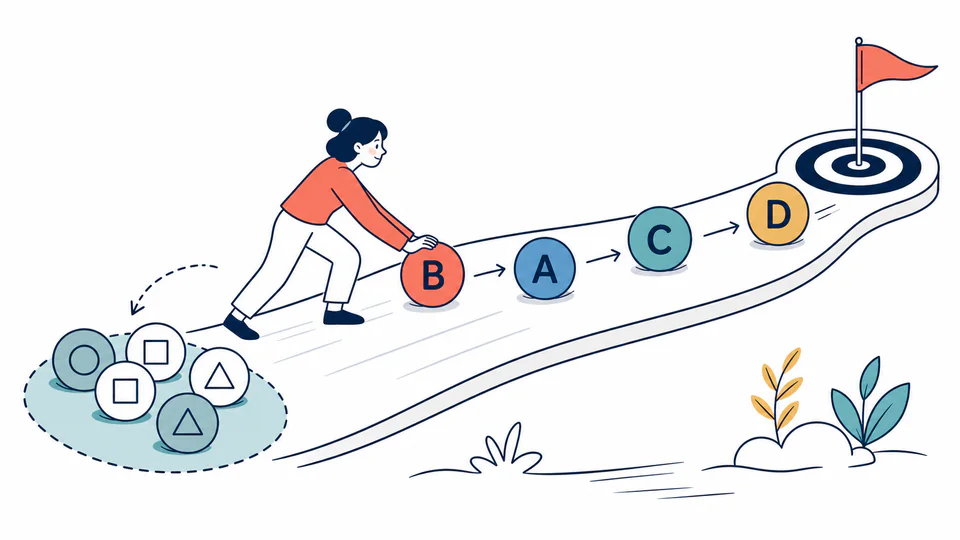
ILLUSTRATION READING GUIDE
For Standardized Test Target Score Calculator, the illustration is a reminder to keep the testing record, the arithmetic threshold, and the next institutional action separate.
For Standardized Test Target Score Calculator, the artwork is not a second calculation and is not exported as a numeric chart. The table above is the auditable numeric record for Correct items required.
DEEPER ANALYSIS
Converts the target percent into a whole correct-item count and subtracts current correct items
Ceiling is required because test items are discrete
Ceiling is necessary because item counts are whole numbers.
RESULT INTERPRETATION
Use this for raw practice planning only; official scaled targets require the test program conversion process.
Ceiling is required because test items are discrete The official source remains the testing-program scoring guide, score report, test form, benchmark definition, and current score policy.
WORKED DECISION CASES
A learner finds how many of 60 scored items must be correct for an 80% raw target. The reviewer saves the ledger before deciding whether study time, schedule load, or policy follow-up is needed.
A tutor converts the gap into additional correct responses without claiming a scaled score. The comparison makes it clear which assumption moved the boundary and which source must be checked.
EVIDENCE AND DATA LINEAGE
For this Standardized Test Target Score Calculator, retain the test form, score scale, date, section definitions, raw or reported score source, benchmark source, and unscored-item rule. A screenshot alone is not a reproducible academic record.
LIMITS AND EXCLUSIONS
RELIABLE SOURCES
FREQUENTLY ASKED QUESTIONS
It supports correct items needed planning for a test taker, tutor, counselor, or program analyst. Read it with the testing record and the policy source used for the inputs.
In Standardized Test Target Score Calculator, Total scored items anchors the current record. If it comes from the wrong term, score report, audit date, or gradebook view, Correct items required is not reliable.
For Standardized Test Target Score Calculator, confirm Current expected correct items uses the same denominator, scale, or policy basis as the rest of the page; mixed bases can make Correct items required look plausible while still being wrong.
Test items are discrete. The ceiling returns the smallest whole correct-item count that reaches the entered raw percentage target.
Not without the testing program conversion for the specific form. Equating, unscored items, and score tables can change the relationship between raw and reported scores.
Save scored-item count, target raw percentage, current correct count, unscored-item rule, test form, date, and any official conversion table used separately.
IMPORTANT NOTE
Ceiling is required because test items are discrete Use this calculator to prepare a decision, not to replace the official record.
RELATED CALCULATORS