Parallel work versus serial protection
Some gifts can ship while others are sourced or wrapped. The serial model is conservative; shorten it only with a real dependency map.
Lifestyle planning
Work backward from a holiday handoff by calculating shopping sessions, sourcing span, shipping lead, wrapping capacity, and schedule buffer for a defined gift count.
HOLIDAY GIFT WORK-BACK
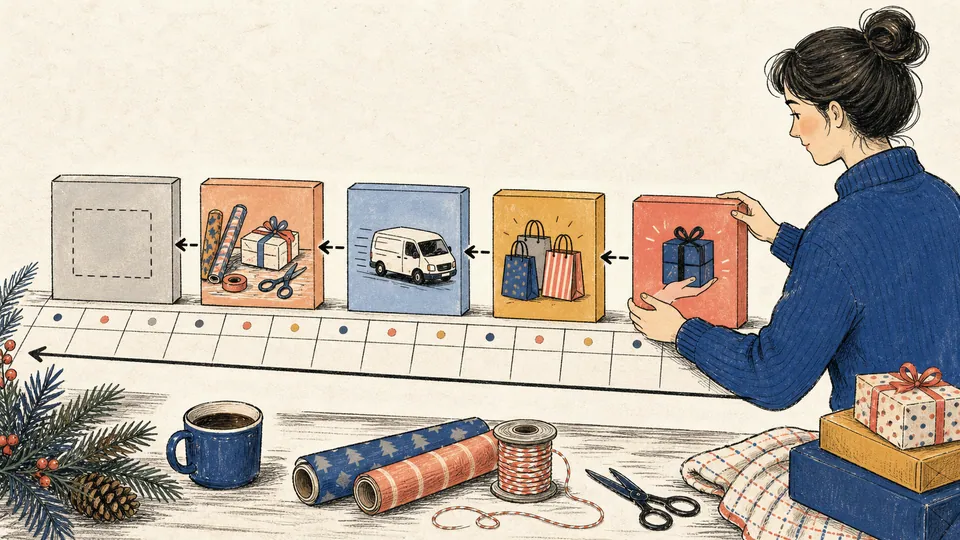
A list is not a schedule. This work-back calculator converts gift count into sourcing sessions and wrapping days, then adds the longest relevant shipping lead and a protected buffer so the household can set a latest practical start.
HOLIDAY GIFT WORK-BACK
Count backward from the required handoff date by the total lead. If sourcing, shipping, and wrapping overlap in reality, this serial result is conservative; document any overlap before shortening it rather than silently deleting buffer.
| Schedule stage | Required units | Capacity / lead | Sessions or days | Scheduling meaning |
|---|
CURRENT CALCULATION PROCESS
Sessions = ceil(G/Cs); Sourcing span = (Sessions-1)I+1; Wrap days = ceil(G/Cw); Lead = span + ship + wrap + buffer
The model converts continuous capacities into whole sessions or days with upward rounding. It treats sourcing, shipping, and wrapping as serial stages and adds the buffer last, producing a conservative work-back lead.
HOW TO USE
SUBJECT FUNDAMENTALS
MODEL AND FORMULA
The model converts continuous capacities into whole sessions or days with upward rounding. It treats sourcing, shipping, and wrapping as serial stages and adds the buffer last, producing a conservative work-back lead.
DEEPER DECISION ANALYSIS
Some gifts can ship while others are sourced or wrapped. The serial model is conservative; shorten it only with a real dependency map.
Seasonal cutoffs, location, service class, weather, and customs affect delivery. Use current seller and carrier evidence, then retain the timestamp.
Creation, curing, testing, or personalization can dominate purchasing time. Count those stages explicitly or run a separate schedule.
WORKED DECISION CASES
Sourcing sessions drive the start date. Increasing one shopping day’s capacity can shorten the plan more than buying faster shipping.
The gift count is small, but one custom order controls the schedule. Use its quoted lead as the binding shipping stage.
TECHNICAL LANGUAGE
EVIDENCE AND DATA LINEAGE
Save the dated gift list, completed-item status, sourcing calendar, sustainable capacity basis, seller processing times, current carrier or seller delivery estimates, return windows, wrapping capacity, buffer rationale, closures, travel dates, and actual completion dates.
LIMITS AND EXCLUSIONS
RELIABLE SOURCES
FREQUENTLY ASKED QUESTIONS
A partial final unit still requires a session or day of capacity. Rounding down would leave work unassigned.
It is the number of days before the required handoff. Apply it consistently to your calendar and document whether the handoff date itself is usable.
Yes, when independent gifts permit it. This page uses a conservative serial sequence; a custom dependency schedule can shorten the critical path.
Use the longest relevant current estimate plus seller processing, not a generic nationwide average. Preserve the source and date.
That can reduce the critical path if capacity and concealment allow it. Document the overlap rather than deleting the wrapping requirement.
Use the protected buffer first, then recalculate the remaining list and calendar. Do not keep reporting the original finish date as current.
IMPORTANT NOTE
This calculator provides a planning lead time and does not guarantee inventory, processing, shipping, customs, returns, weather, or completion. Verify current seller and carrier information and adapt the plan to personal capacity and safety.