The paper beside a calculator often fills up before the screen does. A person adds three receipts, pauses to write a subtotal, then starts again. Press M+ instead, and the calculator can keep that subtotal in a small private register.
That register is deliberately less ambitious than a spreadsheet. It normally stores one running value, accepts additions and subtractions, and can be recalled without disturbing the number currently being edited. Its modesty is the point: it behaves like a scratchpad with a lid.
A register is a place, not a second calculation
Suppose three boxes cost 12, 8, and 5. You can calculate each amount and press M+ after each result. The memory register becomes 25 while the main display remains available for the next item. M- performs the same kind of action in the other direction; MC clears the stored value on calculators that provide it.
Casio manuals distinguish independent memory from answer memory. That distinction matters. The M register is an explicit place you choose to write to. It does not simply mean “whatever happened most recently.”
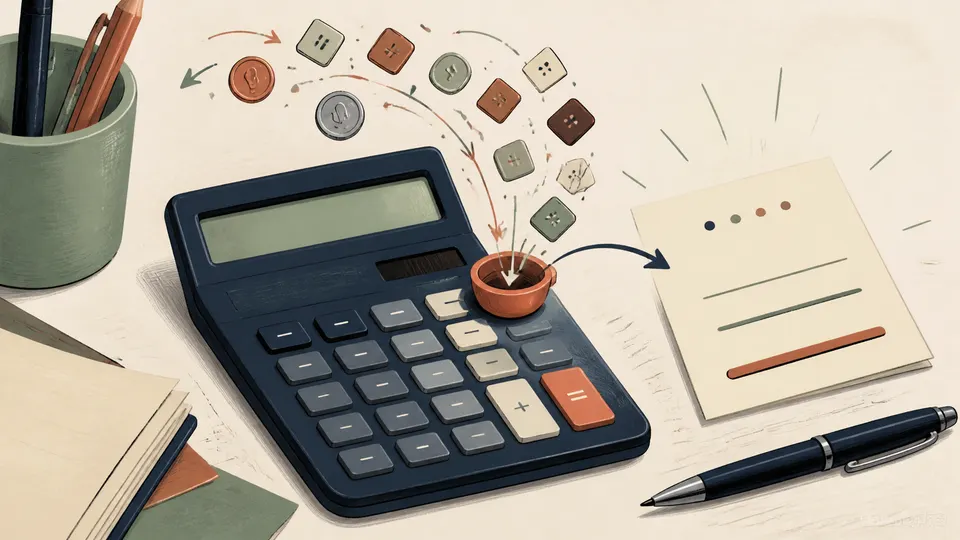
Why the keys feel like an old office machine
Memory keys inherited a physical office metaphor: put something aside, retrieve it, add to it, subtract from it, clear the drawer. The symbols are terse because the workflow was meant to be quick, not because the underlying state is simple.
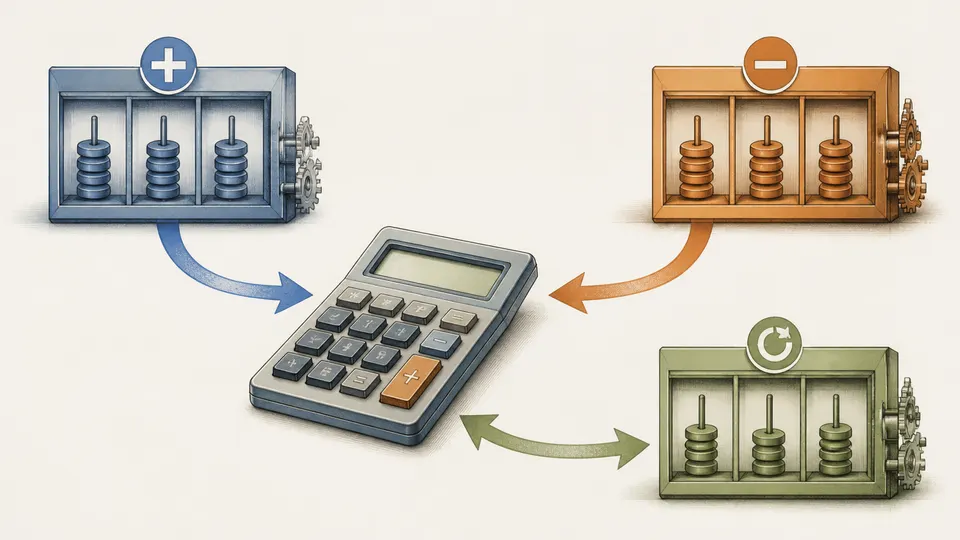
The danger is invisible old memory
A stored value can survive long enough to become mysterious. If a calculator has a memory indicator, treat it like a light on a filing cabinet: check it before a new total, clear it when the old job is finished, and do not assume switching off has the same behavior on every model.
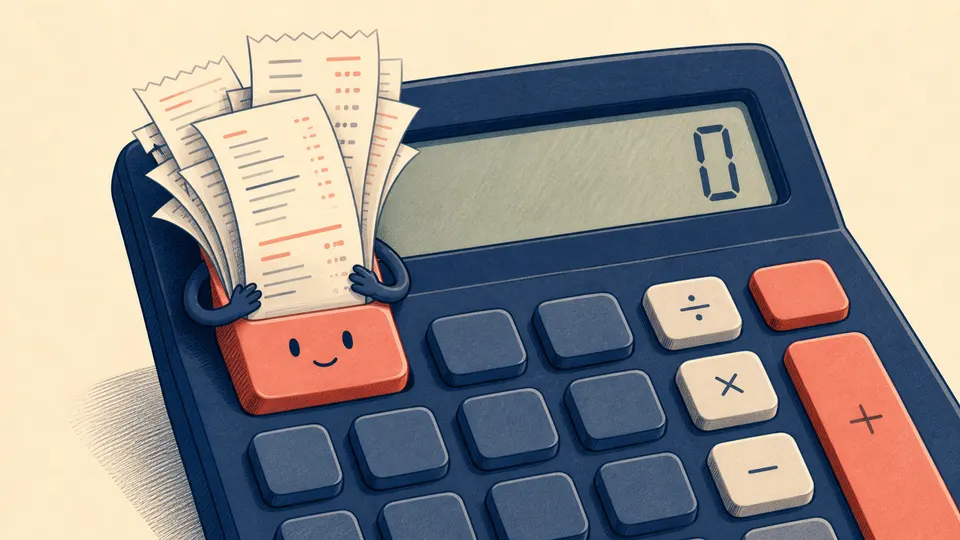
A memory register is not hidden magic. It is a tiny notebook you must remember to empty.