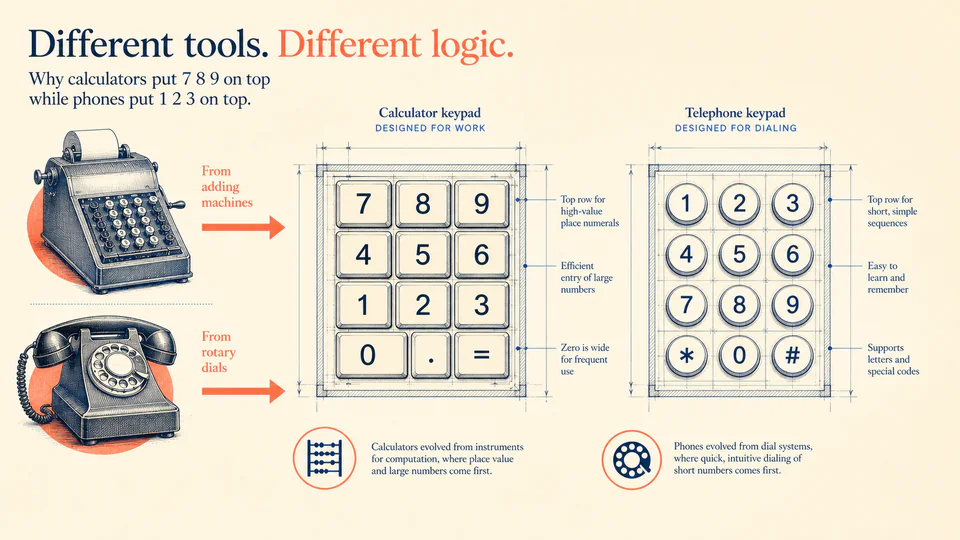
Put a phone and a calculator side by side and the disagreement is immediate. On the phone, 1, 2, and 3 sit at the top. On the calculator, 7, 8, and 9 usually claim that row. Neither device is upside down. They are carrying different pieces of design history in their fingertips.
The calculator arrangement belongs to numerical data entry. The telephone arrangement belongs to dialing. Once a person has practiced one layout, switching to the other is not a small visual inconvenience. It changes where the hand expects the next key to be.
The top row is a memory of the machine before it
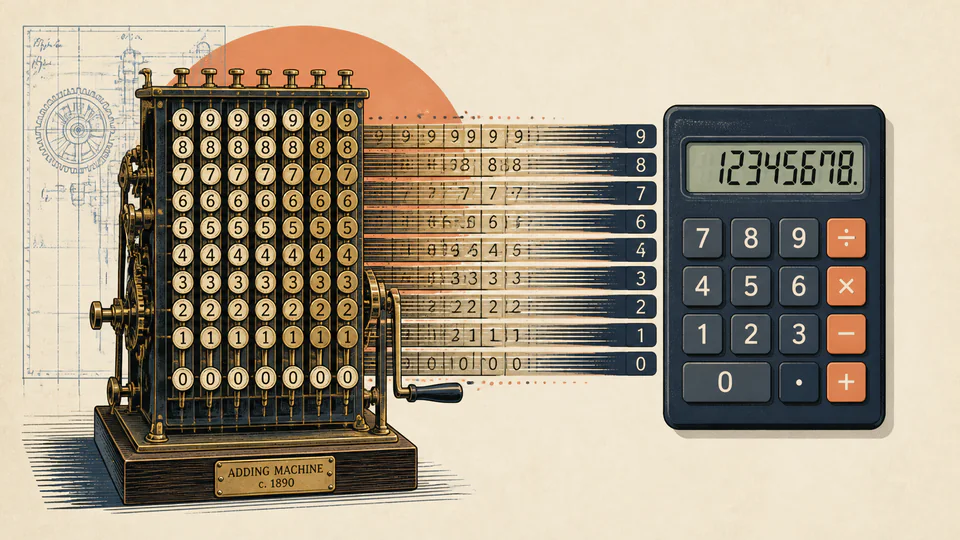
The small electronic calculator did not invent the ten-key arrangement from an empty page. It inherited a pattern associated with adding machines and numerical clerical work. A row of high digits at the top and zero at the bottom makes the pad feel like a compact vertical number field rather than a sentence being read from left to right.
The telephone had a different ancestry. Its keypad was designed around the act of choosing a destination, not entering a column of quantities. The layout studies that influenced telephone keypads tested several arrangements and found that the familiar 1-2-3 top row worked well for dialing. The result became a separate convention.
Familiarity can beat abstract logic
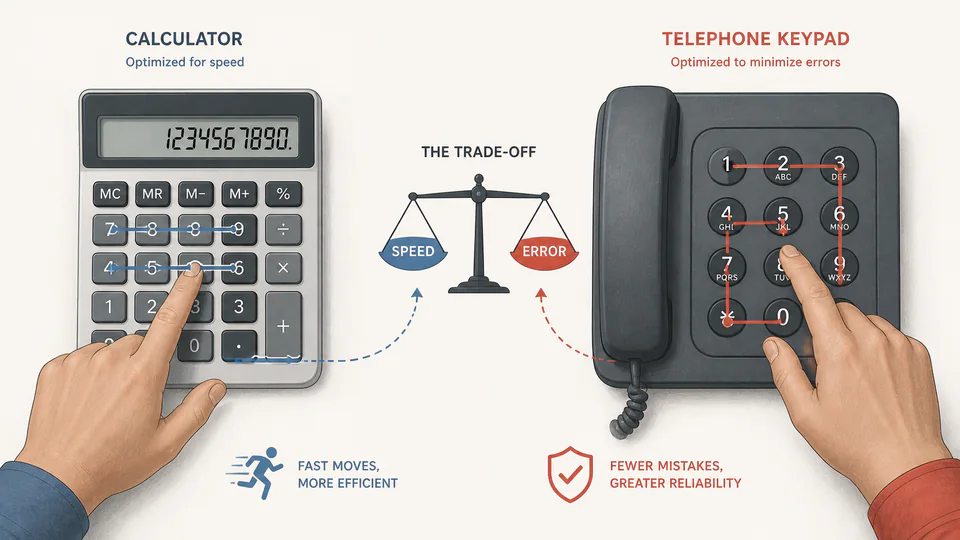
There is no universal law saying that larger numbers belong higher up. The layout works because operators learn it, and because consistency lets the hand move without re-solving the grid on every entry. A person trained on an adding-machine pad may be faster there even if a telephone layout looks more natural to someone reading a list from top to bottom.
That is why a “better” keypad is often only better for a particular task. The human-factors guidance used for numeric keypads notes that both calculator and telephone arrangements can be justified, while switching between them can reduce speed and increase mistakes.
The zero at the bottom is doing quiet work
Zero appears frequently, yet it is usually placed below the 1-2-3 row. That position gives the main digits a compact three-by-three block and leaves zero easy to reach with a thumb or a short downward movement. The decimal point and operators then gather around the block instead of interrupting its rhythm.
The enduring design is not evidence that one layout won every argument. It is evidence that familiar arrangements become infrastructure. Once a workplace, school, or exam expects a particular map, moving the digits is expensive in a way that has nothing to do with manufacturing.
A keypad is not just a diagram of numbers. It is a diagram of learned movement.