The double-zero key looks almost comically specific until you enter 1,200.00 one hundred times. Then the extra key starts to feel like a small piece of industrial wisdom: repeated zeros are not arithmetic, they are data-entry traffic.
A 00 key inserts two zeros with one press. On some financial or cash-register-style keypads, a 000 key goes further. The shortcut is valuable when the dominant job is entering prices, quantities, or account values rather than typing arbitrary scientific expressions.
The key is optimized for the shape of a workload
A general scientific calculator has to reserve space for functions, variables, parentheses, and modes. A point-of-sale keypad can spend one key on a frequent digit pattern because its inputs have a different distribution. Key economy is not just about counting buttons; it is about counting the actions users repeat.
The presence of 00 therefore says something about the calculator’s intended environment. It points toward money entry, bookkeeping, or large rounded quantities. It is a design clue disguised as a convenience key.
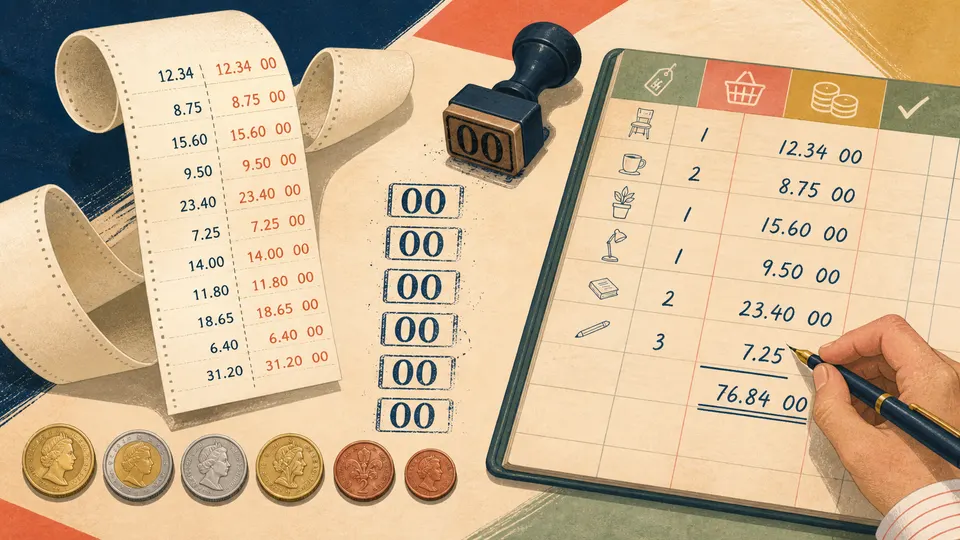
00 is not a multiplication key in disguise
The key generally inserts literal zeros into the current entry. It does not mean “multiply by one hundred,” and it does not carry a special financial rounding rule by itself. The calculator is reducing keystrokes, not changing the number system.
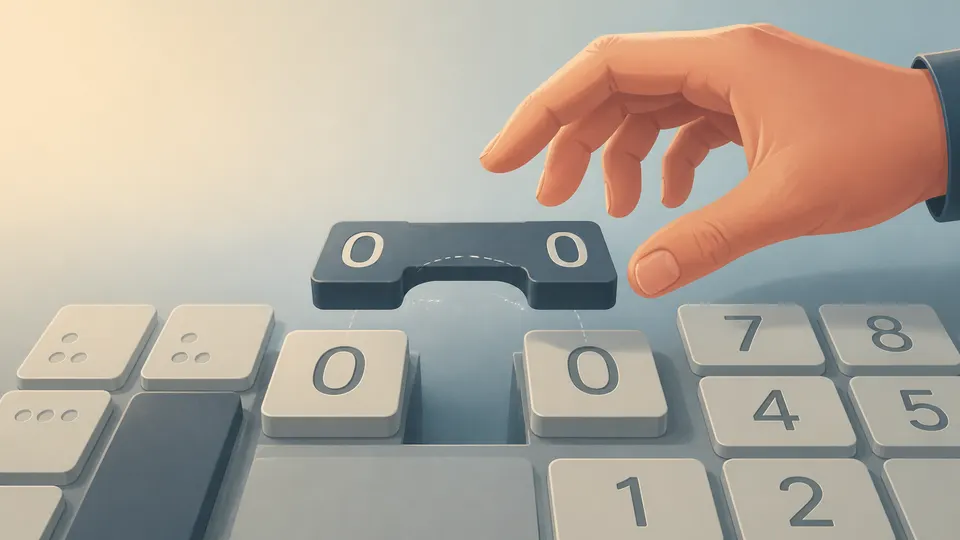
The key changes rhythm more than mathematics
Good data-entry design reduces the number of decisions and movements a person must make without hiding what the machine will enter. A double-zero key succeeds when its location is familiar, its label is unambiguous, and its action can be confirmed by the display.
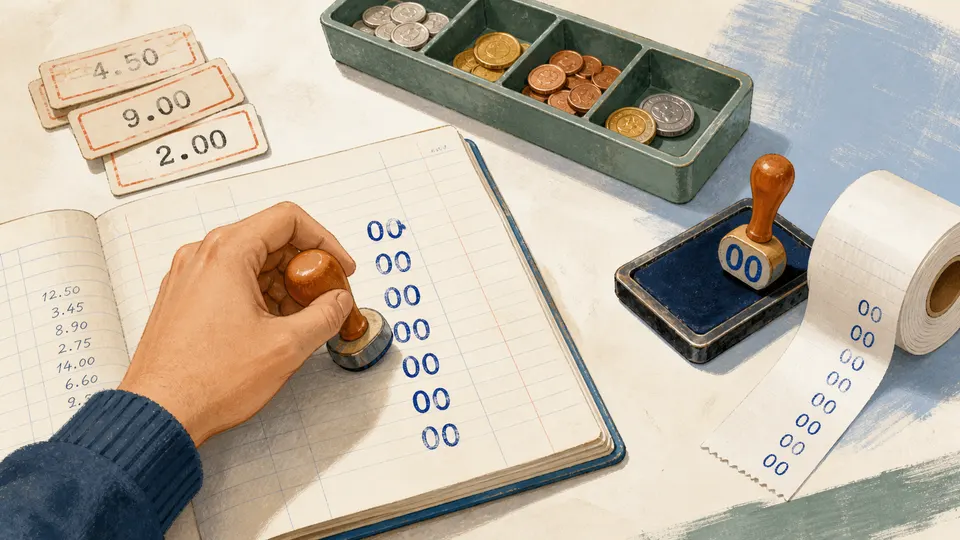
The 00 key is not clever arithmetic. It is honest ergonomics.