A calculator screen has room for only a short line of digits. Scientific notation solves the awkward question of how to show 60240000000000000000000000 without printing a parade of zeros.
It splits the number into a significant part and a scale instruction. The significant part carries the digits worth reading; the exponent says how far the decimal point has moved.
The exponent is a compact ruler
In 6.024 x 10^25, the 6.024 is the mantissa or significand and 25 describes the power of ten. A calculator may display a compact E notation, but the underlying idea is the same: move the decimal point twenty-five places to the right.
TI guidebooks distinguish NORMAL, SCI, and ENG display modes. ENG keeps the exponent in multiples of three, which lines up with kilo, mega, and micro prefixes. The display choice changes the language of the answer, not the physical quantity it represents.
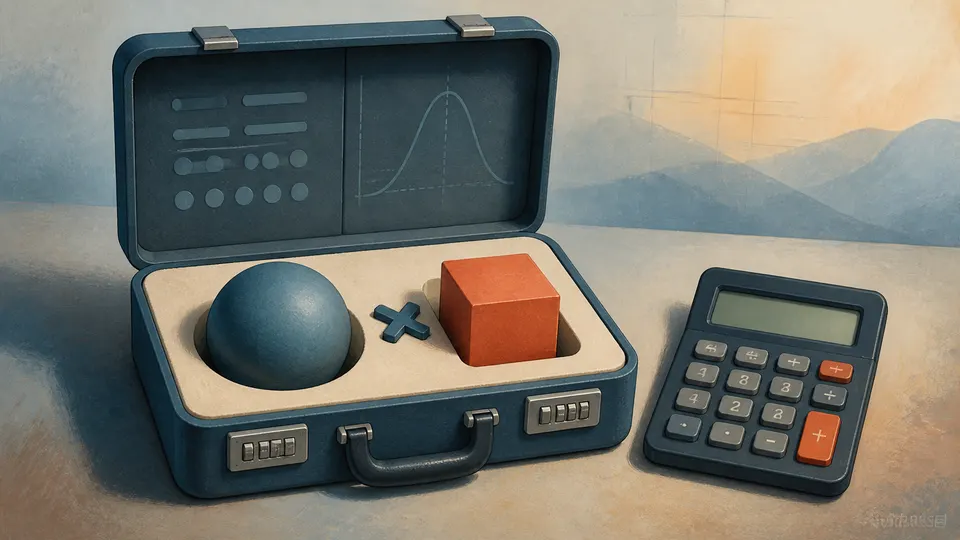
The minus sign on the exponent is not a negative number sign
In 8.02 x 10^-25, the negative exponent means the decimal point moves left. It does not mean the whole quantity is negative. The sign of the number and the sign of its scale are separate pieces of information, which is why scientific notation can feel visually compressed even when the logic is precise.

A display can change without changing the answer
The same result can appear as a long decimal, an E-style value, or an engineering form. When comparing two calculator results, translate the notation before deciding that the machines disagree. A different costume is not a different number.
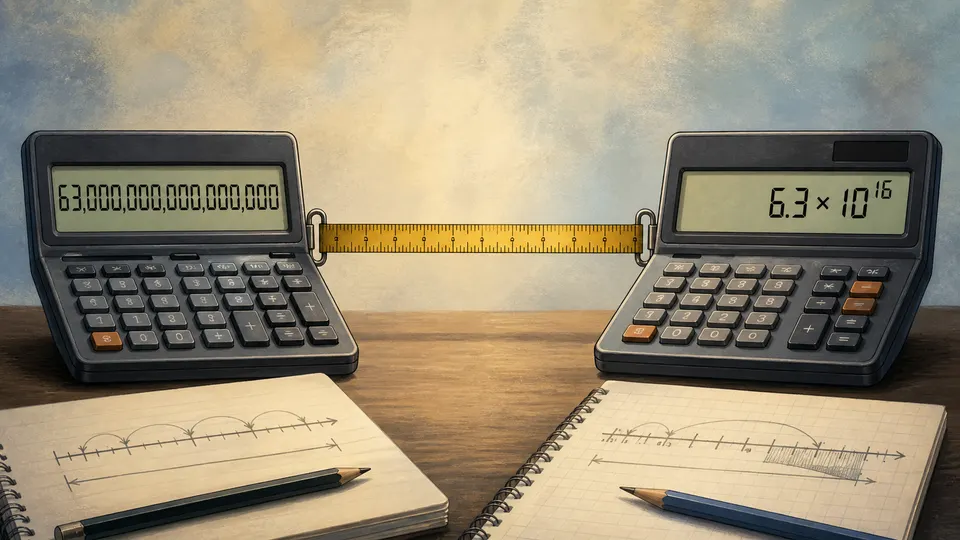
Scientific notation gives a small screen two separate pockets: one for digits, one for scale.