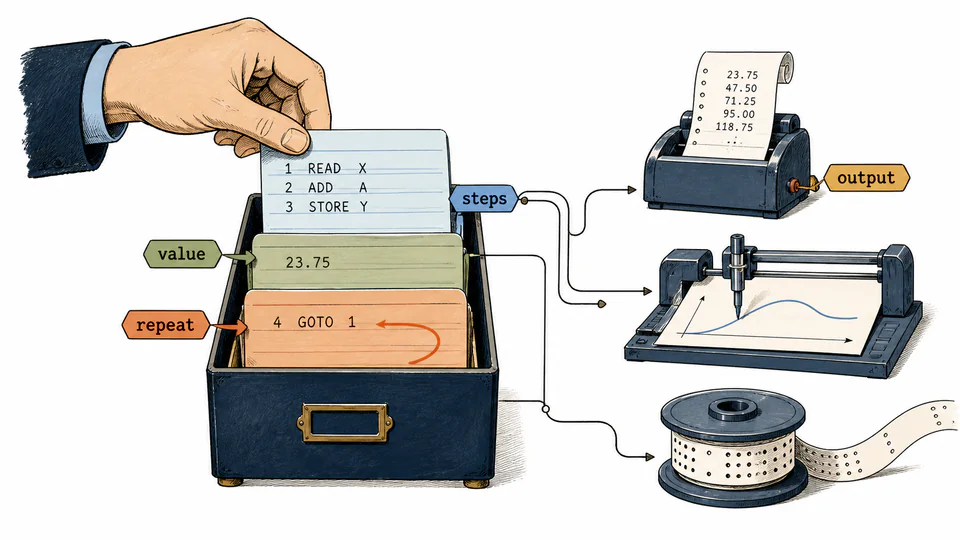
A stored number is a souvenir. A stored procedure is a worker that can come back tomorrow.
That difference changed the cultural identity of the pocket calculator. Once a handheld machine could remember instructions, branch, repeat, label a routine, and exchange information with other devices, “calculator” no longer described everything it was doing.
1979: the procedure entered the pocket
Hewlett Packard Enterprise’s history records that the HP-41C arrived in 1979. It could display alphabetic characters as well as numbers, and HPE describes it as fully programmable and expandable. Its launch price was $295, a historical figure that HPE contrasts with the cost of a personal computer at the time.
The alphabetic display mattered because a program could be more than an anonymous row of key codes. Names, prompts, and labels made a small procedure easier to recognize and reuse.
A program is a reusable calculation recipe
Suppose an engineer repeatedly converts Fahrenheit to Celsius. Manually, the process is:
C = (F - 32) x 5 / 9
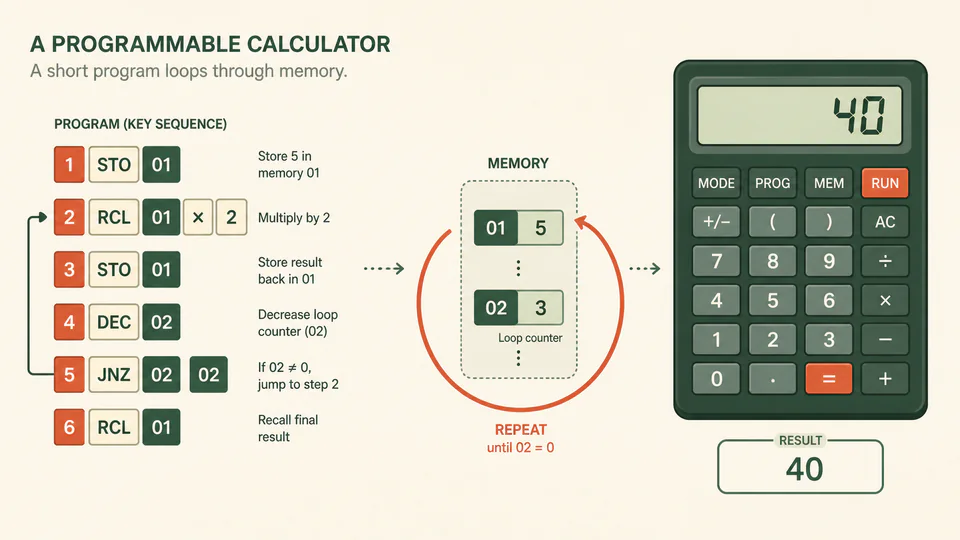
A conceptual program can store the procedure:
Those labels are pseudocode, not a literal HP-41C key listing. The point is the shift in ownership. The user is no longer executing every arithmetic step each time. The user authors the procedure once, supplies a new input later, and lets the stored method repeat.
Expansion turned the device into a system
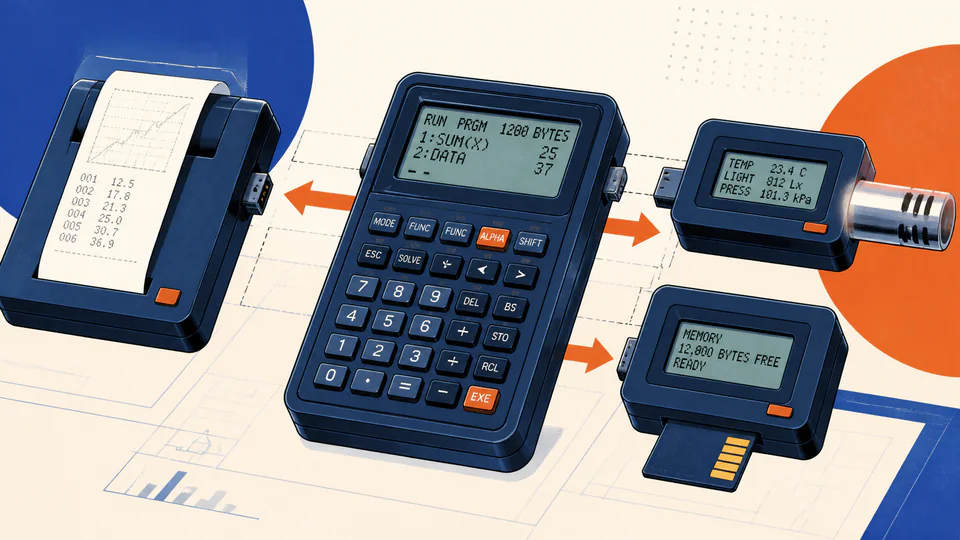
HPE describes the HP-41 series as introducing the calculator as the core of a complete system rather than a self-contained unit. Through the HP Interface Loop, the HP-41C could connect to a printer, plotter, and mass-storage device.
That changes the meaning of the object on the desk:
A printer makes a result persistent. A plotter turns values into a visual trace. External storage allows procedures and data to outlive the immediate session. The calculator becomes the center of a workflow, not merely the endpoint of a keystroke.
1983: the name caught up
HPE’s history labels the HP-41CX an “Alphanumeric Handheld Computer” and dates it to 1983. The same source says it had more than twice as many built-in functions and three times the memory capacity of the HP-41C.
The interesting historical change is not that one marketing department chose a grander noun. The capabilities had accumulated: named procedures, reusable logic, expansion, and peripheral communication. “Computer” became a reasonable description because the user could shape behavior, not only request arithmetic.
Small computers still imposed large constraints
Programmability did not erase the limits of the form. Memory was scarce, displays were narrow, program entry demanded precision, and debugging feedback was modest. Those costs are part of the history. They explain why users learned to compress methods into short routines and why printed manuals, program listings, and shared expertise mattered.
The calculator became computer-like when the owner could leave behind a method that the machine could perform again.