The last digit on a calculator looks harmless. It can decide whether a receipt totals 10.23 or 10.24, whether a measurement crosses a limit, or whether two independently rounded numbers still add up to the displayed total.
Rounding is not the same thing as deleting digits. It is a decision about which nearby representable value should stand in for the longer number.
A display setting is a policy about evidence
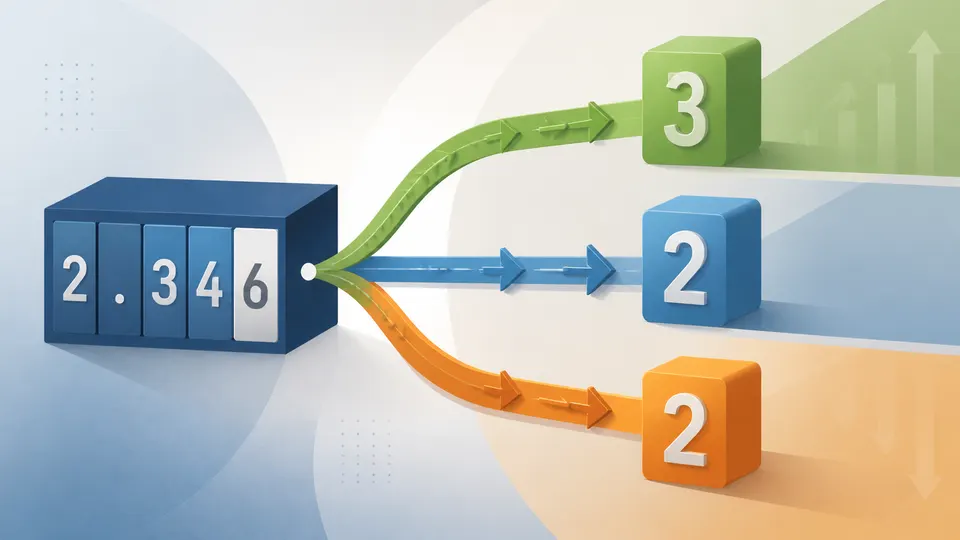
If a calculator is set to show two decimal places, it must decide how to turn a longer result into two. “Nearest” usually looks natural, while “up” and “down” are directional choices. Financial and engineering work sometimes needs a rule that is deliberately conservative rather than visually balanced.
The important question is not whether the calculator rounded. It is which rule it used, and whether the displayed number is being reused in a later calculation or only reported.
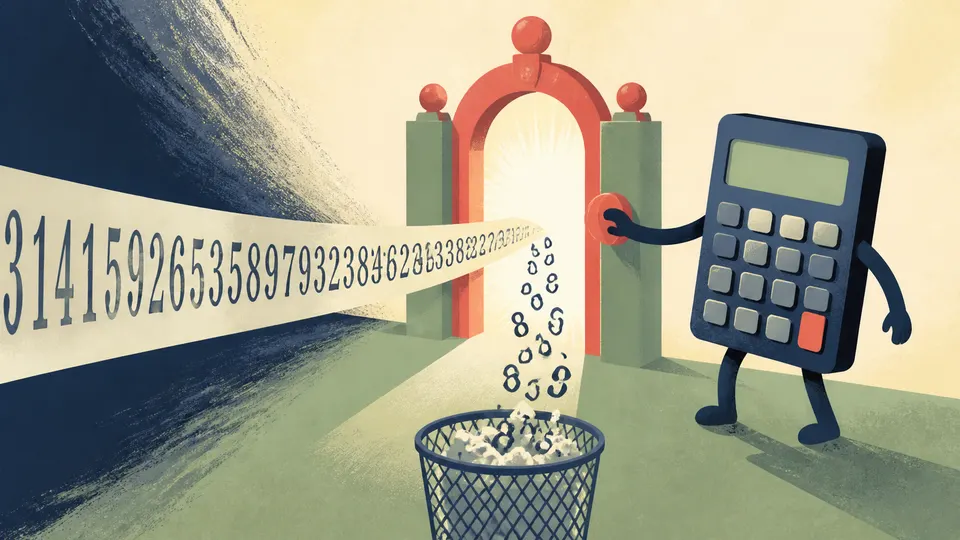
The discarded digits still had a job
For a positive number such as 3.146, showing two places requires inspecting the third decimal digit. If it is large enough, the second place changes. The calculator does not need to print the discarded tail for the decision to depend on it; the hidden digits are evidence, not decoration.
Negative values make casual language dangerous
“Round up” can mean toward positive infinity, away from zero, or simply increase the last shown digit in a classroom shortcut. Those are not interchangeable for negative numbers. A reliable workflow names the direction and checks the calculator manual when the sign matters.
Precision is not just how many digits you show. It is the rule that chooses them.