The Ans key looks like a shortcut for typing a number. It is better understood as a handoff. One calculation finishes, its result becomes the input to the next, and a new completed calculation can replace the old handoff.
This is why Ans is different from an independent memory register. Memory is a named cupboard. Ans is the parcel currently waiting at the door.
The answer is born when an operation is complete
On many scientific calculators, calculating 18 / 3 gives 6, then using Ans x 4 produces 24 without retyping 6. The convenience is especially noticeable when the result has many digits or came from a long expression.
The exact timing and behavior are model-specific. Casio manuals describe Ans and previous-answer memory as separate functions on some models. The safe mental model is not “the screen number”; it is “the calculator’s stored reference to a completed result.”
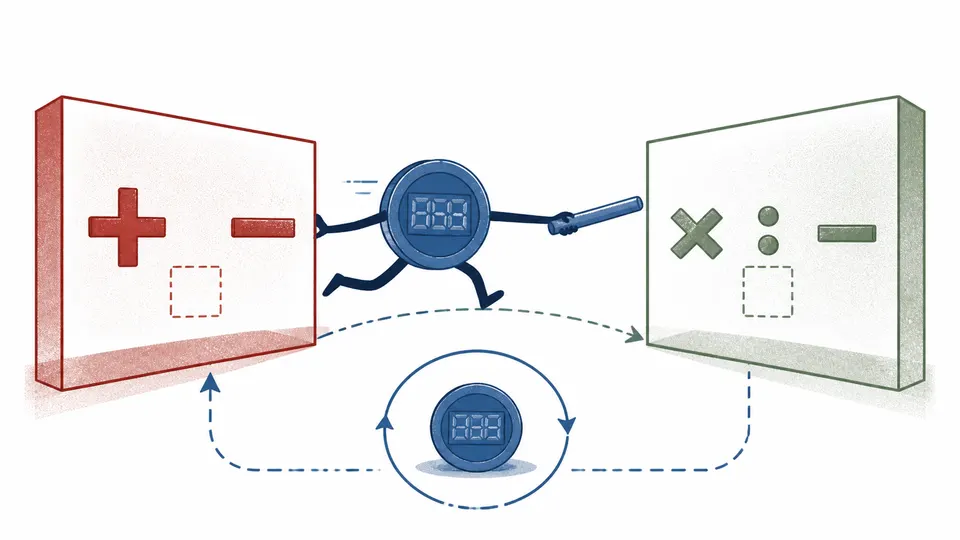
Clearing the display does not explain every state
A clear key may remove the visible entry while leaving other internal values available. Conversely, starting a new calculation can update answer memory even if the display looks familiar. This is one reason a result should be checked by reading the expression, not by guessing what a button “probably” preserved.
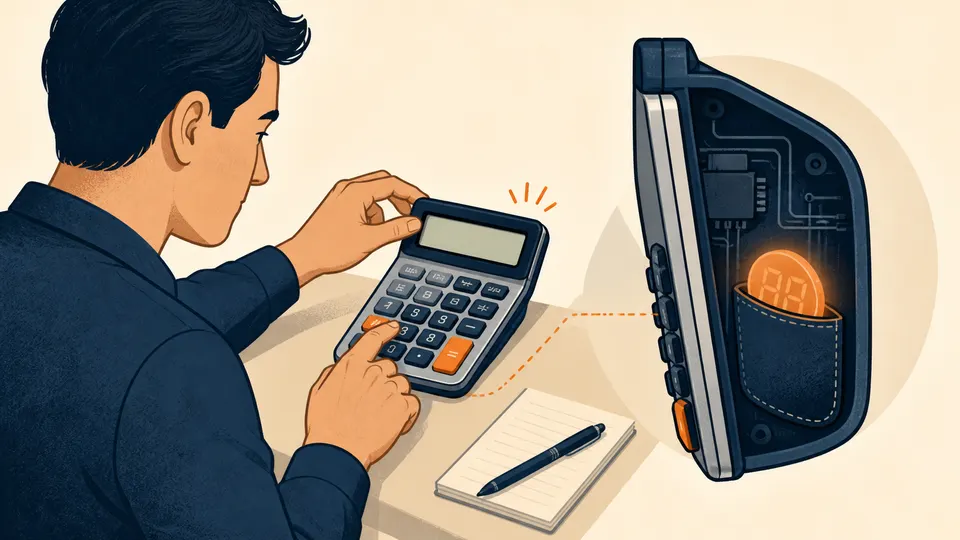
A small state machine hides behind a friendly key
The key feels human because it remembers the last thing that mattered. But it has no intention or understanding. It follows a rule about when a completed result is available and when a later result replaces it.
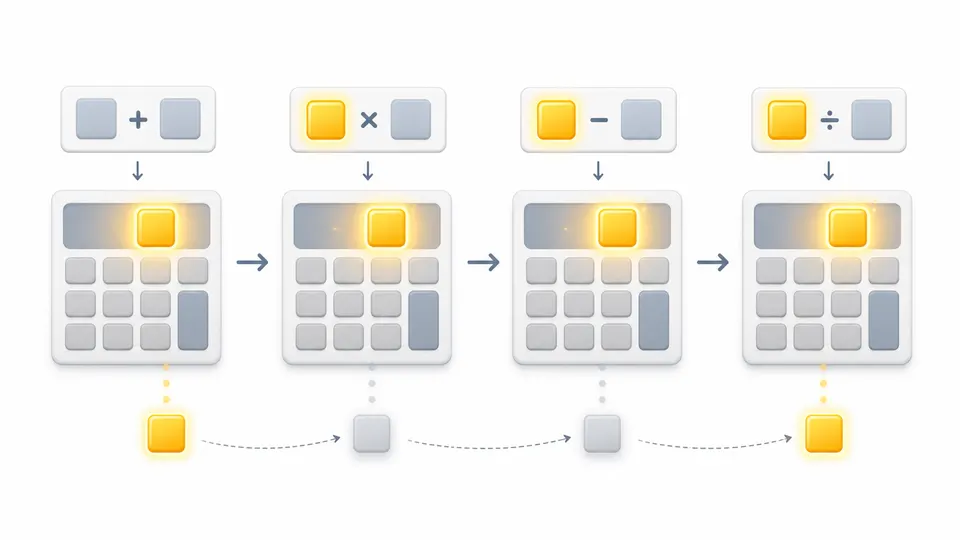
Ans is memory with a short horizon: useful for the next move, unreliable as a filing cabinet.