A display that says -0 looks like a typographical prank. Zero is zero, surely. In ordinary arithmetic, that instinct is right. In some floating-point systems, however, zero can retain a sign bit. The magnitude is zero, but the route into zero was negative.
That distinction is not exposed by every calculator. A particular handheld model may hide it, normalize it, or use a different internal format. Negative zero is best understood as a property of some digital arithmetic systems, not a guaranteed feature of every calculator on a desk.
How can zero keep a direction?
Floating-point formats use special encodings for values near the edges of what can be represented. IEEE 754 defines signed zeros along with infinities and NaNs. The sign can matter when a later operation asks a question about direction, division, or a limit.
Think of a thermometer passing through a marked zero. One reading approaches from below; another approaches from above. If the system preserves that approach, it can distinguish the two paths even though both displayed magnitudes are zero.
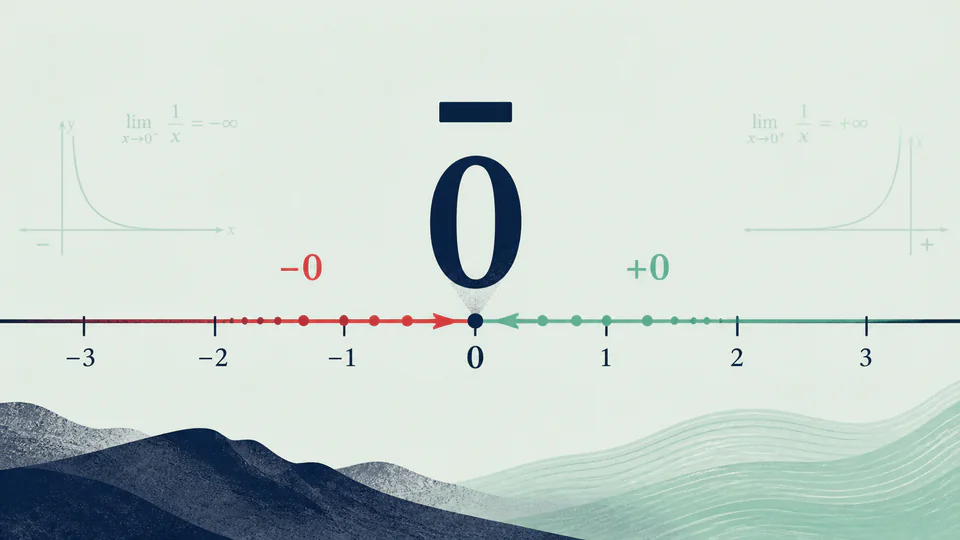
Underflow is where the ghost appears
Suppose a negative value becomes smaller and smaller in magnitude until the format cannot keep representing its detail. Rounding may collapse it to zero while preserving the sign. This is one route by which a negative zero can appear.
The word underflow sounds dramatic, but it often describes a quiet loss of scale. A very small value is not necessarily wrong; it may simply be below the format’s normal range. The sign bit can survive that collapse.
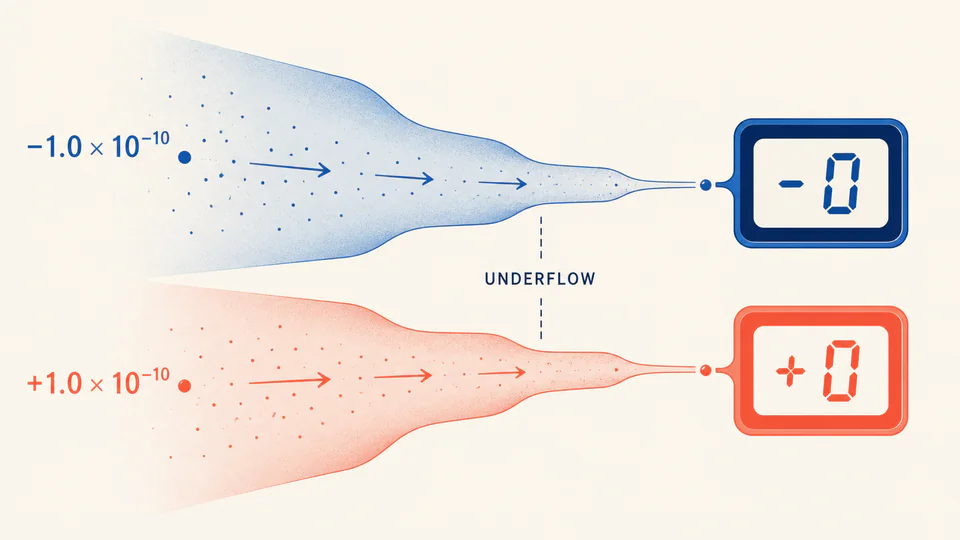
Why keep a sign on nothing?
Signed zero helps make certain arithmetic rules continuous across a boundary. It can preserve the sign of a tiny result and help distinguish a one-sided limit. It also makes some exceptional cases deterministic instead of forcing every operation to invent a special rule.
The visual surprise comes from asking a human question of a machine format. We see a symbol that means “nothing.” The format sees a value plus metadata useful for the next calculation.
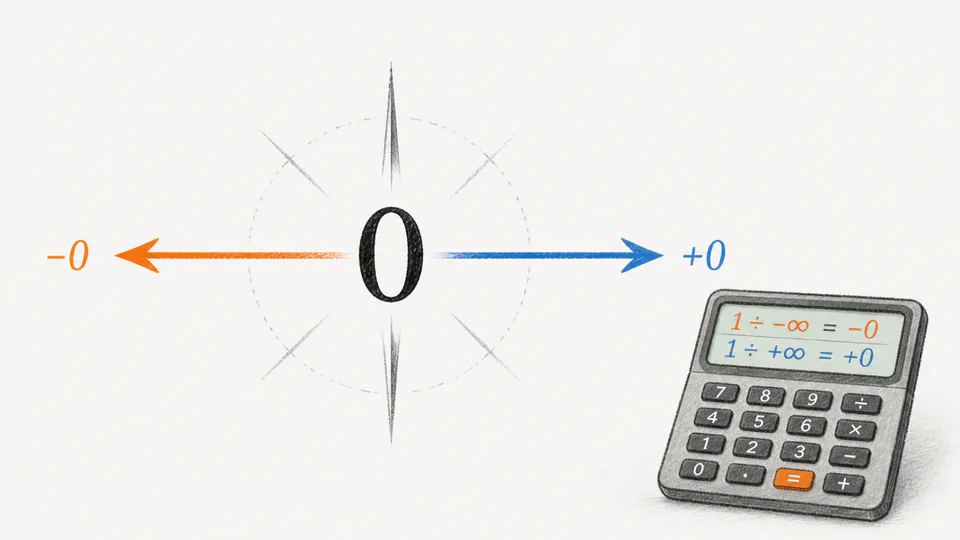
It is not a second kind of nothing. It is a small record of how nothing was reached.