Spending can lead coverage
A few expensive early gifts may consume budget while many recipients remain. The allowance result exposes the constraint before later shopping.
Lifestyle planning
Track holiday gift plan execution by recipient coverage, delivery completion, net committed spend, budget utilization, and remaining allowance per unpurchased recipient.
HOLIDAY GIFT PLAN CONTROL
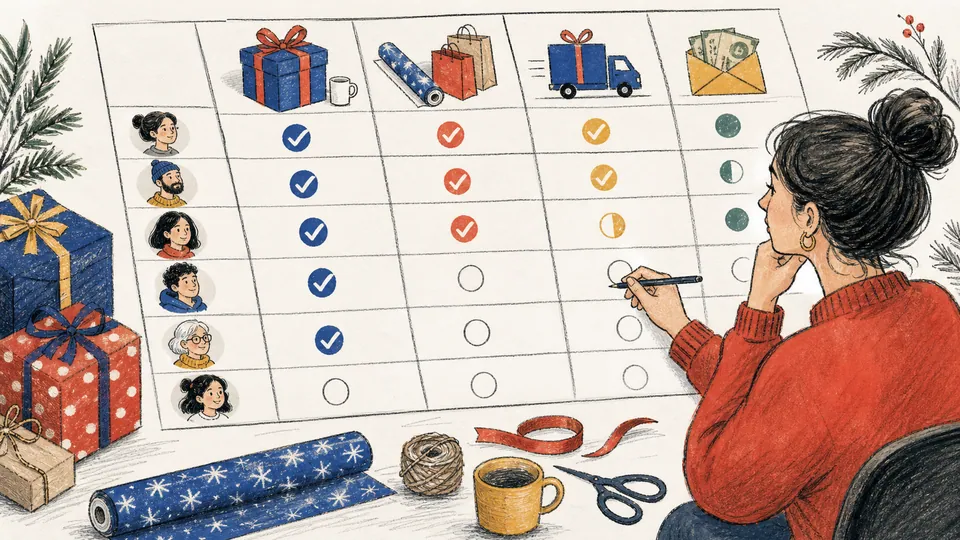
A plan can be nearly fully spent while many recipients remain uncovered, or fully purchased while delivery is still at risk. This page separates purchase completion, delivery completion, and budget utilization, then calculates what remains for recipients not yet purchased for.
HOLIDAY GIFT PLAN CONTROL
Use the three completion rates together. A high spend rate with low recipient coverage signals that the remaining average may be too small; complete purchasing does not mean delivery risk has ended.
| Control stream | Plan / gross amount | Completed / refunds | Net / delivered | Outstanding meaning |
|---|
CURRENT CALCULATION PROCESS
Net committed = Spend-Refunds; Purchase% = Purchased/Recipients; Delivery% = Delivered/Recipients; Remaining = Budget-Net; Allowance = Remaining/(Recipients-Purchased)
The model validates the sequence delivered no greater than purchased no greater than planned. Refunds reduce committed cost only in the net budget measure. Outstanding allowance is undefined when every recipient is already purchased for.
HOW TO USE
SUBJECT FUNDAMENTALS
MODEL AND FORMULA
The model validates the sequence delivered no greater than purchased no greater than planned. Refunds reduce committed cost only in the net budget measure. Outstanding allowance is undefined when every recipient is already purchased for.
DEEPER DECISION ANALYSIS
A few expensive early gifts may consume budget while many recipients remain. The allowance result exposes the constraint before later shopping.
Backorders, shipping, wrapping, travel, and handoff still remain after checkout. Keep delivery completion separate until evidence closes it.
A requested return is not the same as a posted refund. Preserve gross commitment and label the entered amount according to the evidence available.
WORKED DECISION CASES
The remaining average per uncovered recipient may be much lower than the original plan. Pause and rebalance before buying more.
Financial selection is complete but fulfilment remains on the critical path. Review shipping and handoff dates rather than reporting the project finished.
TECHNICAL LANGUAGE
EVIDENCE AND DATA LINEAGE
Retain the dated recipient list, gift assignment, order or receipt, gross amount, tax and shipping treatment, cancellation status, return request, posted refund, tracking or handoff evidence, budget version, and notes for unpurchased recipients. Do not overwrite earlier statuses.
LIMITS AND EXCLUSIONS
RELIABLE SOURCES
FREQUENTLY ASKED QUESTIONS
One recipient may receive several packages. Recipient coverage answers whether anyone remains unplanned for, while the item ledger can remain separate.
No. The page rejects that state because delivery must follow a committed gift in this model.
Remove them only when cancellation is confirmed and the obligation is released. Preserve the original transaction record.
Outstanding allowance is not defined because there is no remaining recipient denominator. Remaining money can be released or reassigned deliberately.
It preserves auditability and prevents a pending refund from erasing the original commitment.
No. Purchase and delivery coverage may still be incomplete, and support costs may sit outside the direct gift budget.
IMPORTANT NOTE
This page is an operational record, not financial, tax, legal, consumer-rights, shipping, or relationship advice. Verify orders, refunds, delivery, available funds, and seller terms before reporting completion.